AccuPoint Next Generation | ATP Sanitation Verification
Skip to: SamplersHow it worksPublished verificationNSF comparisonFAQContact
You are responsible for protecting your facility's quality standards and monitoring for any potential issues as you oversee your biosafety and facility hygiene processes. Quantifying the effectiveness of your sanitation practices is vital to the success of your organization's efforts, whether that is measured in scientific results, animal health or patient outcomes.
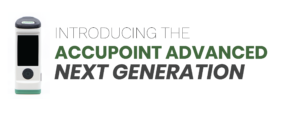
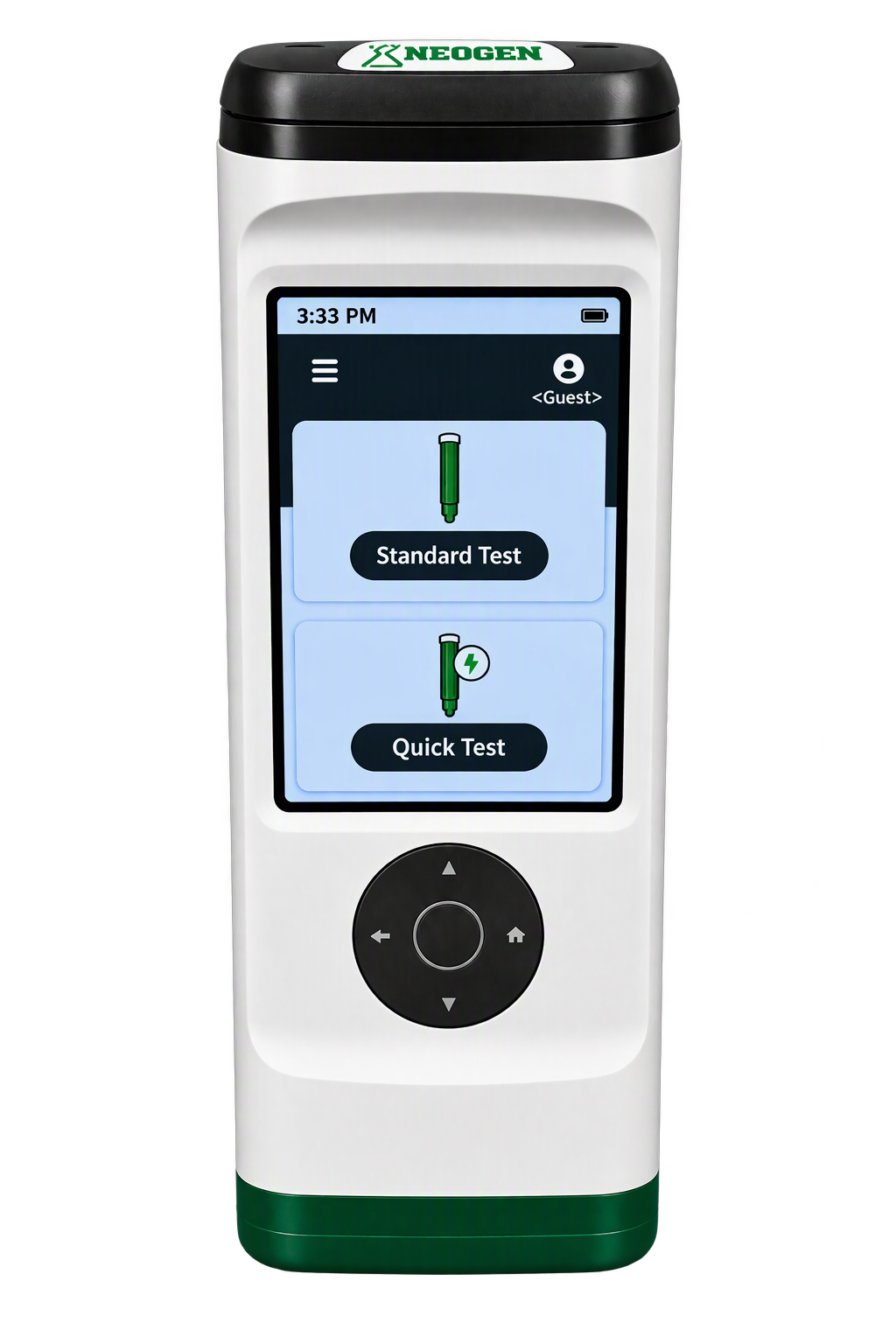
The AccuPoint® Advanced Next Generation (NG) is a complete sanitation monitoring system designed to verify your cleaning processes by measuring adenosine triphosphate (ATP). An ergonomic handheld reader and Data Manager software let you create multiple routine testing plans, track and trend results over time, and collate results for auditing purposes.
Core elements of the AccuPoint Next Generation
- A digital record of your testing procedures and instant information required for audits
- Touch screen that makes navigating to areas and sites fast and easy
- Multiple routine testing plans
- Surface, water, and access-specific samplers
Customizable threshold levels
Pass and fail thresholds can be raised or lowered according to your needs, and our Biosafety Account Managers can help you set the values that fit your facility.
Three samplers
Surface, access, and water samplers cover flat surfaces, hard to reach areas, and liquid samples such as CIP rinse waters.
Track, trend, and audit
Data Manager software tracks and trends results over time and provides a digital record of your testing procedures for audits.
Consistent, repeatable sampling
The AccuPoint Advanced system includes a surface sampler, an access sampler, and a water sampler, all read by the same reader and reported in relative light units (RLUs).
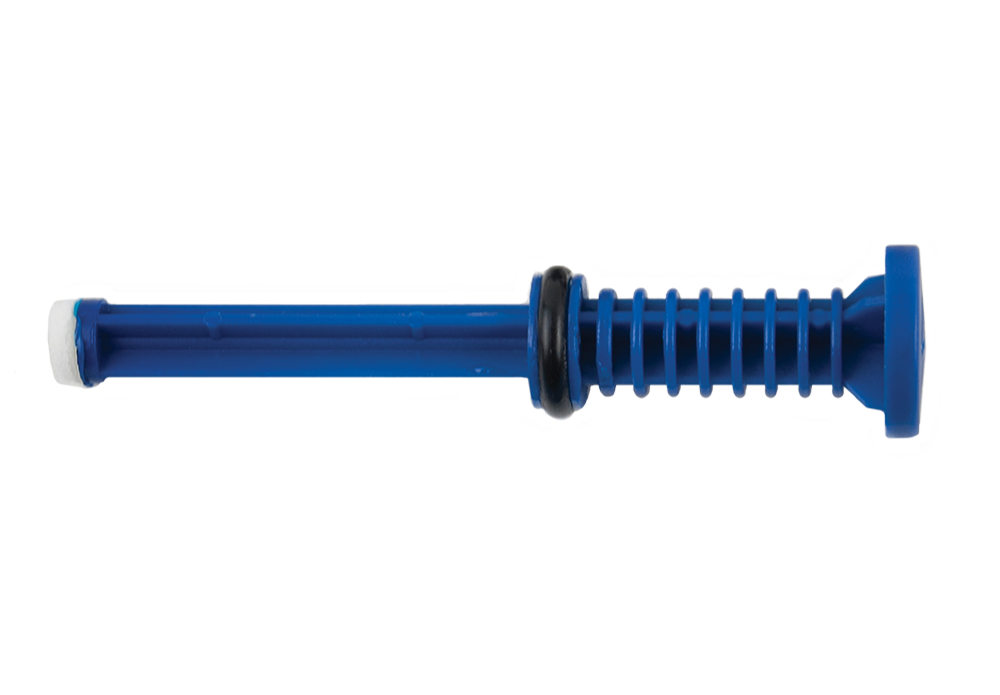
Surface Sampler
An innovative flat-tipped sampler gives your team the same technique and comparable results from room to room.
- More significant surface contact
- Recovers more ATP than traditional q-tip swabs
- Breaks through biofilms
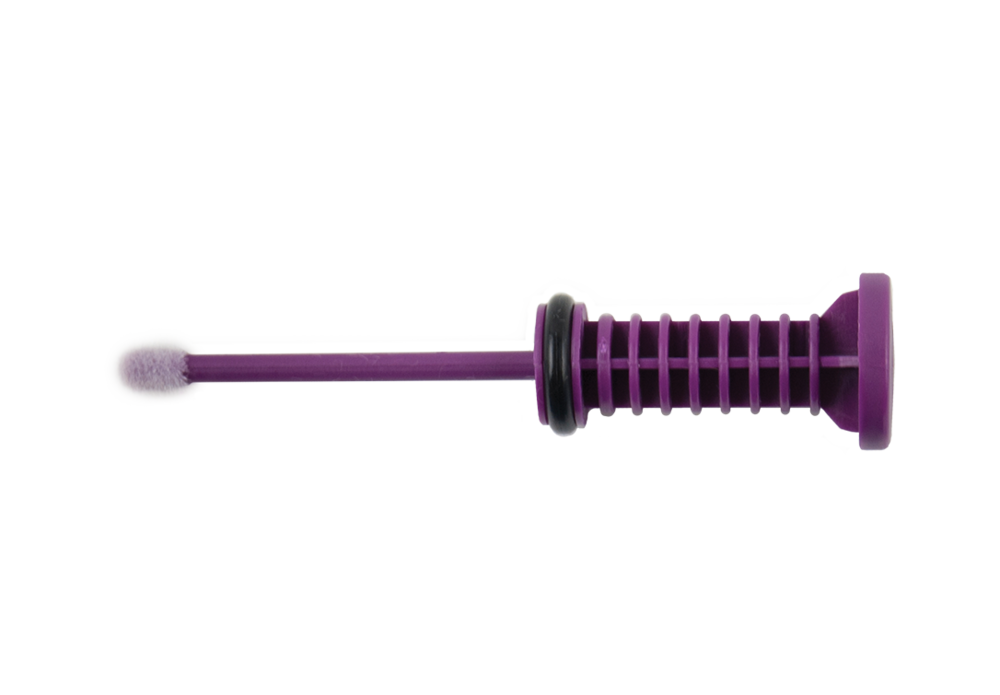
Access Sampler
With the access sampler, you can maneuver hard to reach areas easily.
- For testing ATP in tight areas
- Reaches spots that may sometimes be overlooked
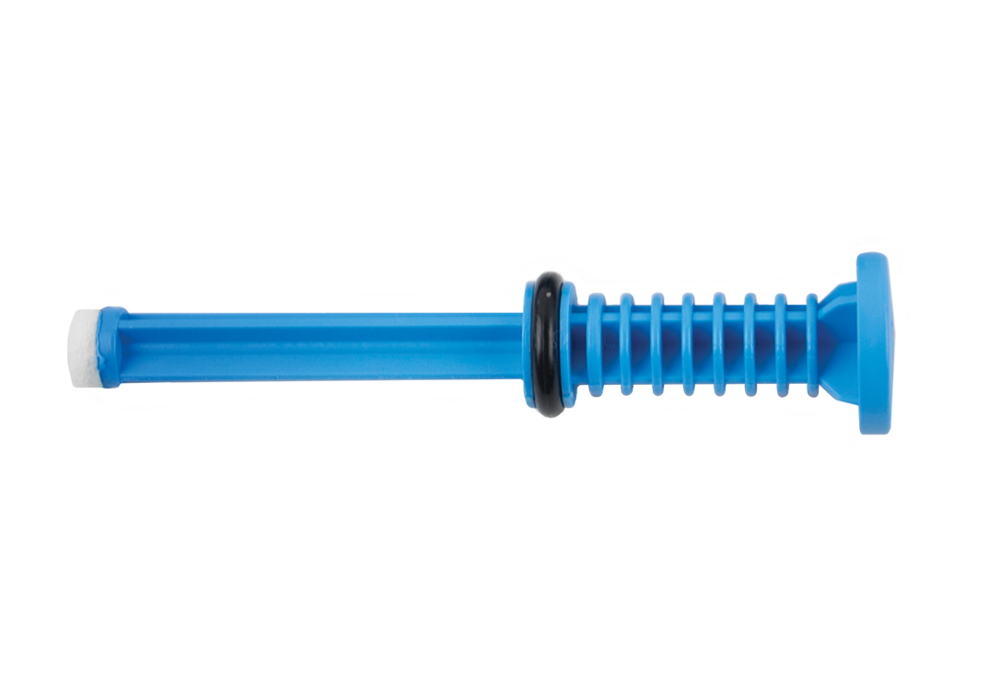
Water Sampler
For use in liquid samples, such as CIP (Cleaning-In-Place) rinse waters.
- Ensures consistent samples every time
- Designed for best results from rinses
From swab to result in four steps
ATP is a chemical compound found in all living cells, including bacteria, food debris, yeast, and mold. The AccuPoint Advanced samplers use ATP bioluminescence to determine the cleanliness of test samples, and the amount of light emitted is proportional to the amount of ATP in a sample. The reader measures it in relative light units (RLUs). When verifying the effectiveness of your sanitation, the less ATP, the better.
- 1
Swab
Swab a 4 inch by 4 inch area in a cross-hatch pattern, with the sponge tip slightly compressed against the surface.
- 2
Activate
Fully depress the sampler into its housing, keeping it vertical, to release the reagent.
- 3
Mix
Gently mix for about 2 seconds, then place the sampler in the reader and close the door.
- 4
Read
The reader delivers fast, accurate pass, marginal, or fail results against the thresholds you set for each test site.
Where we recommend ATP monitoring
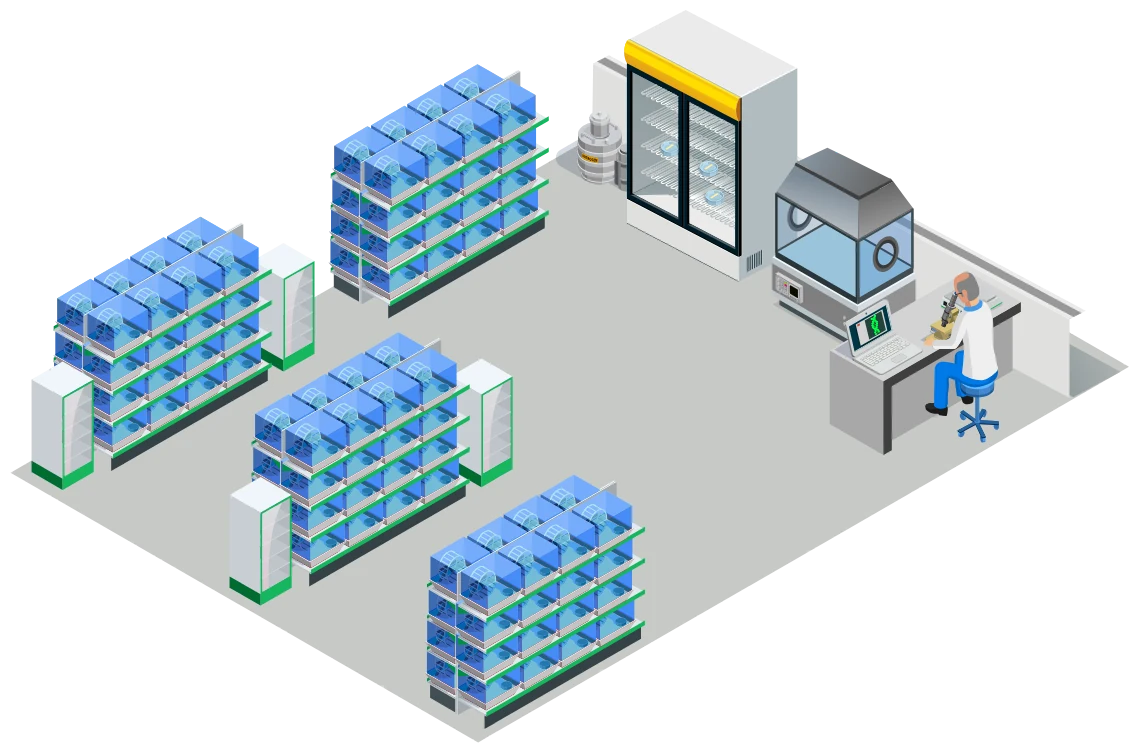
Build a site plan around the points that matter most to your program. Each test site carries a surface and zone type label, so trends are easy to trace and act on. Hover over an area to see what to sample.
- 1
Cage racks
Rack frames, shelves, and cage ledges are handled with every cage change. Verify the cleaning of the surfaces technicians touch, and use the access sampler for hard to reach areas.
- 2
High touch surfaces
Light switches, door handles, keypads, and cabinet handles are touched constantly and make dependable, repeatable test sites for every room in your site plan.
- 3
Laboratory fridge
Check door handles, shelves, and the interior surfaces where samples and supplies are stored, so cold storage is checked to the same standard as the rooms around it.
- 4
Biosafety cabinet
Verify the work surface, sash, and handles between uses. The access sampler maneuvers hard to reach areas easily.
- 5
Diagnostic equipment
Benchtops, keyboards, instrument panels, and touchscreens are shared by many hands. Regular swabs show whether routine cleaning is reaching them.
Peer-reviewed verification of the AccuPoint Advanced ATP Hygiene Monitoring System
The AccuPoint Advanced system has received AOAC Performance Tested Method approval (PTM #091601), an external verification from top industry experts. The findings below describe the consistent and reliable data behind your RLU readings.
Verified under an AOAC International Performance Tested Method
The system was evaluated against an established AOAC framework for detecting ATP on stainless steel surfaces.
Linear response to ATP, confirmed by independent laboratories
More ATP produces proportionally more light, so a higher RLU reading reflects more organic residue left behind.
Variability across three readers below 3%
Readers in the study agreed closely with one another, so results stay comparable across devices and technicians.
Consistent results across three lots and a 9 month shelf life
Samplers made in three independent lots performed consistently, including at the end of the shelf life.
NSF International comparison of five ATP systems
NSF International compared AccuPoint Advanced with four other commercial ATP systems on stainless steel, sampling a 4 inch by 4 inch area the way a technician does in the field. AccuPoint Advanced recovered more than twice as much ATP as the next highest system when contamination was scattered in small spots or present as a liquid soil, and it gave the most consistent readings in every test.
| Test on stainless steel | ATP recovery AccuPoint Advanced | highest of other four |
Variability (%CV, lower is better) AccuPoint Advanced | lowest of other four |
|---|---|---|
| Evenly distributed ATP | 27.8% | 28.9% | 21.1% | 31.9% |
| Randomly placed spot of ATP | 40.5% | 17.9% | 40.6% | 63.6% |
| Liquid organic soil | 31.0% | 13.1% | 33.1% | 37.2% |
Source: NSF International comparison of five commercial ATP hygiene monitoring systems, 2015. Higher recovery means the system detects more of the organic material on the surface. A lower %CV means more repeatable scores.
Using ATP and CFU testing together
ATP confirms that a surface was cleaned and is ready for disinfection. It does not confirm that a disinfectant did its job, because residual ATP can come from dead or recently inactivated cells. Quip Labs biosafety account manager David Ferguson compared 2,300 paired ATP and CFU samples collected at five research institutions to show how the two tests complement each other.
Read the ATP and CFU analysisFrequently asked questions
What does ATP monitoring measure?
ATP monitoring measures adenosine triphosphate (ATP), a chemical compound found in all living cells, including bacteria, food debris, yeast, and mold. The AccuPoint Advanced samplers use ATP bioluminescence to determine the cleanliness of test samples. The amount of light emitted in the reaction is proportional to the amount of ATP in a sample, and the reader measures it in relative light units (RLUs). When verifying the effectiveness of your sanitation, the less ATP, the better.
How do I take a proper surface sample?
Remove samplers from refrigeration one hour before use. Swab a 4 inch by 4 inch area in a cross-hatch pattern, applying enough pressure that the sponge tip is slightly compressed against the surface. Return the sampler to its housing, fully depress it while holding it vertical to activate it, mix gently for about 2 seconds, and place it in the reader.
How quickly do I get a result?
The reader delivers fast, accurate pass, marginal, or fail results based on the RLU thresholds you set for each test site. Thresholds can be raised or lowered according to your needs.
Can I test water and hard-to-reach areas?
Yes. The system includes surface, water, and access samplers. The water sampler is for use in liquid samples, such as CIP (Cleaning-In-Place) rinse waters. With the access sampler, you can maneuver hard to reach areas easily.
Does a passing ATP result mean a surface is disinfected?
No. ATP confirms that a surface was cleaned and prepared for disinfection, but it does not confirm that a disinfectant made the surface microbially safe. Pair ATP monitoring with microbial testing such as CFU contact plates to verify your disinfection step. See our ATP and CFU analysis for the data.
How are results documented?
AccuPoint Advanced Data Manager software provides a digital record of your testing procedures and the instant information required for audits. It also tracks and trends results over time and lets you create multiple routine testing plans.
Discuss the AccuPoint Advanced Next Generation with a Biosafety Account Manager
Tell us about your facility and we will help you set baseline pass and fail values for the surfaces, rooms, and water sources that matter most.
Need a quote? Ready to order? Just want to say hi? Fill out the form!
"*" indicates required fields