Acidulate 150 | Our Most Popular Acid Cage Wash Cleaner
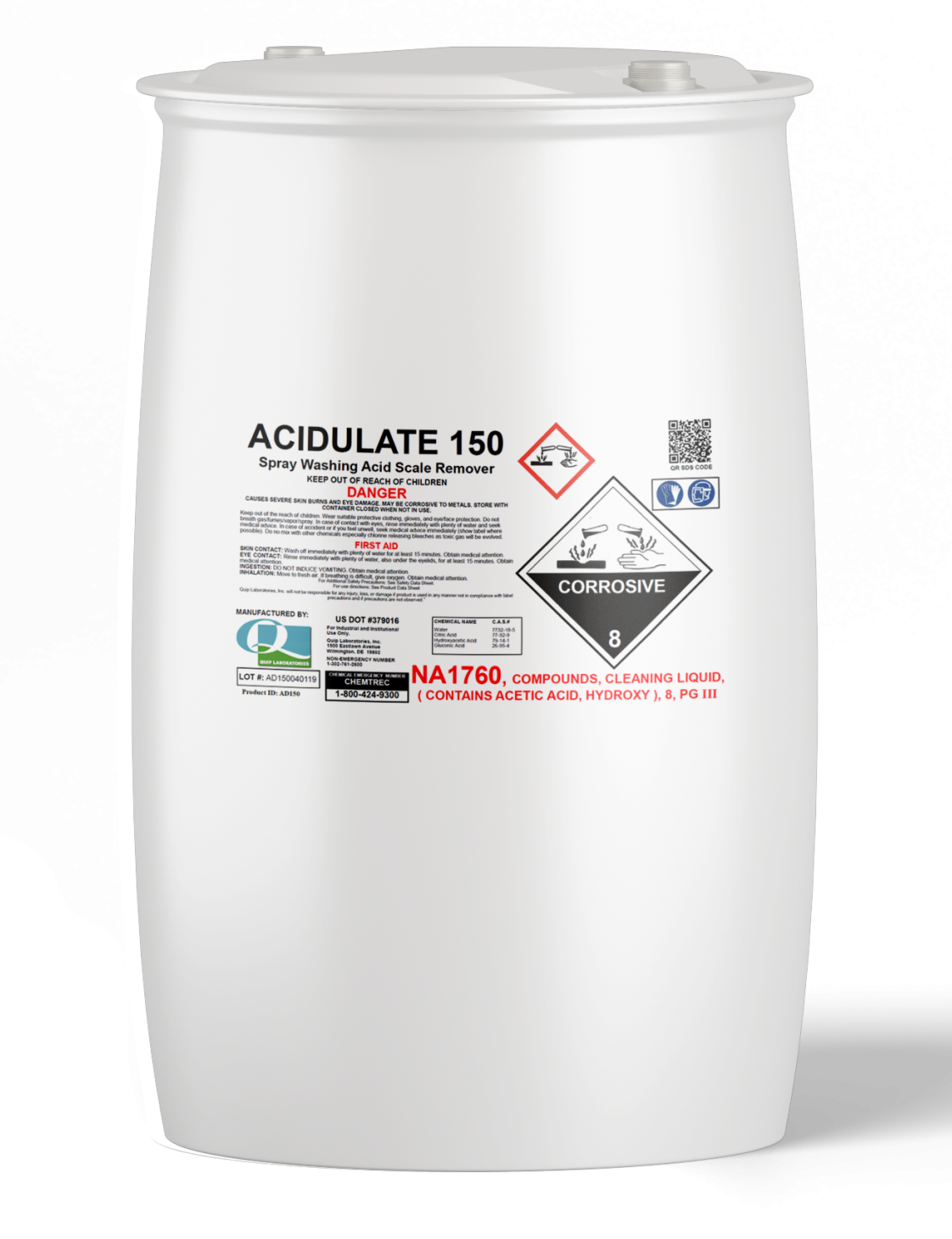
Acidulate 150
Acidulate 150 is formulated with a blend of chelating organic acids, wetting agents, and detergents specifically designed for the removal of urine deposits and mineral scale.
Unlike inorganic acid cleaners that depend on achieving a very low pH, Acidulate 150 is effective across a wide pH range. This makes it suitable for recirculating spray washers that require a chemical-free final rinse or a neutralized wash cycle.
- ✓Removes urine deposits and chelates mineral scale from caging and equipment
- ✓Neutralized by Enviro-Kleen 100 in the wash — cleaning solution won't precipitate mineral salts
- ✓Two-chemistry program with Enviro-Kleen 100 eliminates the need for a dedicated neutralizer
How Acidulate 150 works
Acidulate 150 is an organic acid cage wash cleaner formulated with a blend of chelating acids, wetting agents, and detergents specifically designed for the removal of urine deposits and mineral scale. Because its organic acids chelate mineral ions rather than relying on acidity alone, the cleaning solution can be neutralized by an alkaline detergent like Enviro-Kleen 100 during the wash cycle without precipitating mineral salts. This makes it well suited for recirculating spray washers that require a chemical-free final rinse or a neutralized wash cycle.
| Component | Function | Mechanism |
|---|---|---|
| Citric Acid | Primary chelating agent & mineral scale remover | Sequesters calcium, magnesium, and other mineral ions, dissolving scale deposits and keeping them in solution for clean rinsing. |
| Hydroxyacetic (Glycolic) Acid | Penetration & urine scale removal | Low molecular weight organic acid that penetrates urine scale quickly. Works synergistically with citric acid to chelate mineral deposits. |
| Gluconic Acid | Wide pH range efficacy & soil suspension | Maintains chelating activity across a broad pH range, allowing Acidulate 150 to remain effective even as the solution is neutralized during the wash cycle. |
| Wetting Agents & Detergents | Penetration & free-rinsing performance | Reduce surface tension to allow the solution to penetrate scale and soil deposits; rinse away completely without residue. |
Resources
Product Data Sheet
Technical specifications, application guidelines, and product features.
Download Data Sheet (PDF)Safety Data Sheet (SDS)
Complete safety information, handling requirements, and regulatory data.
Download SDS (PDF)Pair with Enviro-Kleen 100
The Acidulate 150 and Enviro-Kleen 100 combination is our most popular two-product cage wash program. No third-product neutralizer required.
Learn more →MaestroChem® Chemical Management
Automated dispensing, remote monitoring, and managed deliveries. Let us handle the chemistry so your team can focus on the work.
Learn more →Choosing a Cage Wash Detergent
Species, pH, water hardness, equipment type. Our guide covers the factors that actually matter when selecting a cage wash program.
Read the guide →Frequently Asked Questions
Ready to evaluate Acidulate 150?
Our account managers can assess your wash center setup, water quality, and caging program.
Need a quote? Ready to order? Just want to say hi? Fill out the form!
"*" indicates required fields