Sani-Plex 128M | Laboratory and Veterinary Disinfectant

A one-step EPA-registered disinfectant and cleaner for laboratory, veterinary, and animal care environments. Neutral pH when mixed, effective against 80+ pathogens, no added dyes or fragrances.

One-step disinfection and cleaning for research and animal care environments
Sani-Plex 128M is a multipurpose, neutral pH disinfectant and cleaner that handles both tasks in a single pass. It is registered with the EPA for use on hard, non-porous surfaces in laboratory, veterinary, and animal care environments — including vivaria, veterinary clinics, animal research centers, and pet shops.
The formulation maintains full efficacy in hard water conditions up to 400 ppm (as CaCO₃) in the presence of 5% organic soil — conditions that challenge many other disinfectants in real-world facility use. It contains no added dyes or fragrances and remains stable when diluted.
Sani-Plex 128M is included on EPA List N, confirming efficacy against SARS-CoV-2 (COVID-19). It eliminates 99.9% of the COVID-19 virus in 2 minutes on hard, non-porous surfaces. The complete list of 80+ EPA-registered efficacy claims is available in the downloadable efficacy sheet.
Registered claims against gram-negative and gram-positive bacteria, human and animal viruses, fungi, and mildew.
On EPA List N — eliminates 99.9% of SARS-CoV-2 (USA-WA1/2020) in 2 minutes on hard, non-porous surfaces.
Maintains full efficacy up to 400 ppm water hardness in the presence of 5% organic soil load.
Registered for use in veterinary clinics, animal research centers, pet shops, and other animal care facilities.
Head-to-head: quat vs. hydrogen peroxide in a real vivarium
UCLA's Division of Laboratory Animal Medicine (DLAM) conducted a comprehensive evaluation comparing quaternary ammonium and hydrogen peroxide-based disinfectant chemistries across 10 buildings and 38,000 rodent cages. The study addressed efficacy, behavioral impact on animals, surface residue, and operational cost — every dimension that matters in a working vivarium.
The trigger for the study was a finding that 48% of facility floors were failing ATP benchmarks with the facility's existing chemistry. UCLA evaluated both chemistries across four test groups using cotton and microfiber mop heads, collecting ATP samples before and after mopping in four animal rooms over three weeks.
Mice showed statistically significant aversion to the hydrogen peroxide product (p < 0.0001). Rats trended toward aversion as well. Both species showed no preference or aversion to quaternary ammonium — in any strain tested.
Bryant Volpe et al., AALAS Poster P209. Division of Laboratory Animal Medicine & Behavioral Testing Core, UCLA.Beyond behavioral impact, quaternary ammonium outperformed on every operational dimension: no surface residue, no foaming, and 1.25 oz per application versus 2–8 oz for the H₂O₂ product. Quaternary ammonium with microfiber mops was selected as the UCLA DLAM facility-wide standard.
View the Full Study Summary
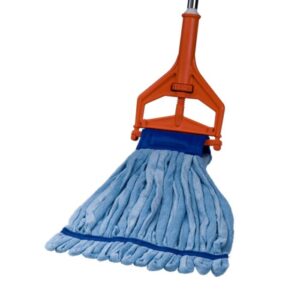
Microfiber mop application — the UCLA DLAM-validated method for vivarium floor disinfection.
Head-to-head results: quaternary ammonium vs. hydrogen peroxide
| Parameter | Quaternary Ammonium | Hydrogen Peroxide |
|---|---|---|
| No animal aversion — mice | ✓ | ✕ |
| No animal aversion — rats | ✓ | ✕ |
| No surface residue | ✓ | ✕ |
| No foaming | ✓ | ✕ |
| Technician preference | ✓ | ✕ |
| Use rate | 1.25 oz/gal | 2–8 oz/gal |
| ATP reduction with microfiber mop | ✓ | ✓ |
| Selected as facility-wide standard | ✓ | ✕ |
Sani-Plex 128M is registered for use on all washable, hard, non-porous surfaces in laboratory, veterinary, and animal care environments. It can be applied by spray bottle, hose-end foamer, or mop — making it practical across room types and workflow preferences.
Application methods
Quart Spray Bottle
For targeted surface disinfection of counters, equipment, and fixtures. Ready-to-use in most formulations.
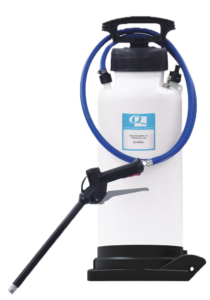
Hose-End Foamer
Ideal for large-area coverage of walls, drains, and high-traffic room surfaces where full coverage is needed quickly.
Mop — General Traffic Areas
The UCLA DLAM–validated method for vivarium floors. Microfiber mop heads are recommended for best ATP performance.
Registered environments
Research Laboratories
Counters, biosafety cabinets, equipment surfaces, sealed floors, and walls in biomedical and pharmaceutical research settings.
Veterinary Clinics
Exam tables, kennels, surgical prep areas, and facility floors. Registered for animal contact surfaces with broad pathogen coverage relevant to companion animal care.
Animal Research Centers
Vivarium corridors, holding room floors and walls, cage wash areas, and environmental monitoring–validated spaces.
Pet Shops & Boarding
Kennels, retail floors, grooming areas, and animal housing surfaces where effective disinfection without residue is essential.
Animal Hospitals
ICU areas, treatment rooms, surgical suites, and high-touch surfaces requiring broad-spectrum virucidal and bactericidal coverage.
General Facilities
Trash handling areas, restrooms, sealed foundations, loading docks, and any hard non-porous surface requiring hospital-grade disinfection.
Registered surface types (partial list)
- Countertop laminates
- Sealed & finished floors
- Sinks & tub surfaces
- Glass surfaces
- Stainless steel
- Porcelain & glazed tile
- Sealed granite & marble
- Plastic (PC, PVC, PS, PP)
- Aluminum, brass, copper
- Chrome & vinyl
- Formica® & Plexiglas®
- Enameled & painted surfaces
- Conductive flooring
- Sealed stone & slate
- Walls & ceilings
- Fixtures & doorknobs
- Shelves, racks & carts
- Tables, chairs & desks
- Washable wallpaper
- Trash containers
See the full product label for the complete list of registered surfaces and use instructions.
Product documentation
Safety Data Sheet (SDS)
Complete safety information, handling requirements, disposal instructions, and regulatory data for Sani-Plex 128M.
Download SDS (PDF)Efficacy Sheet
Full list of EPA-registered efficacy claims for Sani-Plex 128M, including all 80+ pathogens, contact times, and dilution rates.
Download Efficacy Sheet (PDF)Data Sheet
A concise product overview including key features, active ingredients, application methods, and contact information.
Download Data Sheet (PDF)UCLA vivarium disinfection study
Read the full AALAS poster comparing quat and H₂O₂ across 38,000 cages — ATP data, behavioral assays, and validated protocols.
Browse all disinfectants
Explore Quip Labs' full line of EPA-registered disinfectants and cleaners for laboratory, veterinary, and animal care use.
MaestroChem® chemical management
Automated dispensing, remote monitoring, and managed deliveries. Let us handle your chemical program end to end.
Frequently asked questions
Ready to put Sani-Plex 128M to work in your facility?
Our biosafety account managers can evaluate your disinfection program, review your pathogen exposure profile, and confirm Sani-Plex 128M is the right fit.
Send us a message
Need a quote? Ready to order? Just want to say hi? Fill out the form!